


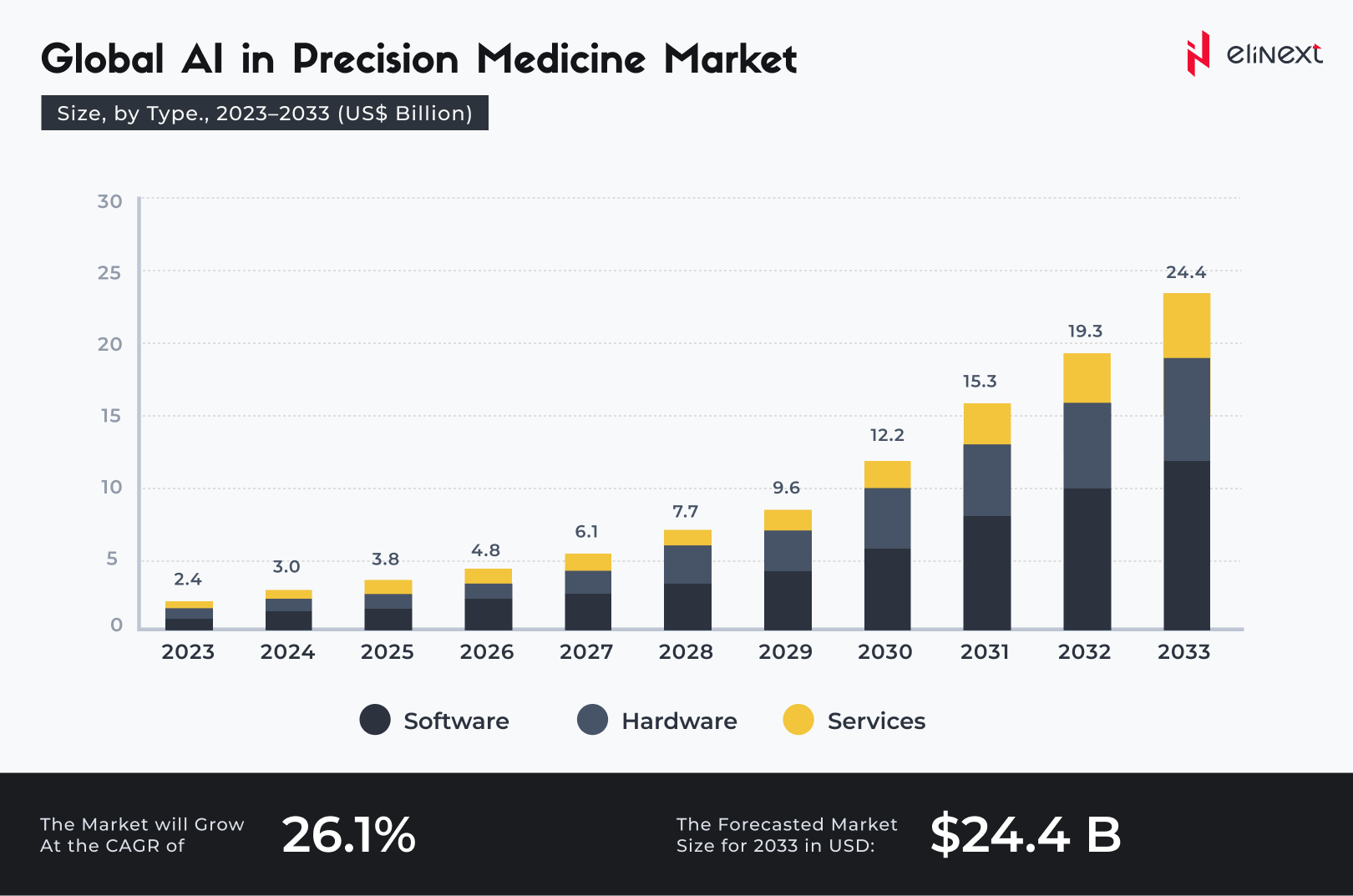
The rapid adoption of AI-based digital solutions within the global healthcare ecosystem has become the pivotal force in the quest to deliver personalized, patient-centric care. From processing vast amounts of heterogeneous patient data to detect disease risks and forecast treatment responses, to designing new drugs unique to each patient, providing advanced wearable monitoring devices, and more, using AI for personalized treatment augments the landscape of precision medicine.
What is AI in Personalized Treatment Plans?
AI personalized treatment plans refer to the use of AI algorithms like machine learning and deep learning to elevate diagnostic precision and support personalized treatment by selecting the optimal therapy for each patient based on their unique genetic and clinical profiles, minimizing adverse outcomes.
Key AI Solutions for Personalized Treatment
Personalized Treatment Plans
Care delivery organizations can apply AI-led systems to assess a patient’s reaction to a specific therapy by analyzing wearable-generated data and digital health records and then make evidence-based treatment plan adjustments as necessary.
Diagnostic Support and Predictive Analytics
Intelligent software relies on machine learning, deep learning, and statistical modeling to analyze medical images, genetic information and electronic health records to identify early signs of health issues, predict lifetime disease trajectories, and prevent the risk of complications.
Medication Customization
AI models process general patients’ data like genomics, complete medication history (prescription medications, supplements, herbal remedies, etc.) and allergies to determine potential drug–drug interactions and optimize drug dosing
Remote Patient Monitoring
AI systems can analyze environmental conditions and patients’ vital signs data from portable devices/sensors for remote use and identify complications early, enabling care teams to provide prompt treatment for post-acute recovery, chronic diseases, and high-risk patients at home.
Patient Sentiment Analytics
NLP-driven analytics tools that analyze voice tone and speech patterns to decode a patient’s emotional state can be effectively integrated into care plans to improve patient-provider communication, boost treatment adherence, and increase patient engagement.
Therapy Delivery
With the rigorous clinical training, conversational AI models are demonstrating efficacy on par with, or exceeding, that of human clinicians, augmenting traditional care models and significantly improving outcomes for individuals with depressive and anxiety disorders.
Personal AI Assistants
AI solutions for personalized treatment include AI chatbots that support patients by scheduling appointments and sending visit reminders, assessing symptoms and providing supportive information, auto-detecting mental state and redirecting to appropriate resources, such as a therapist or crisis hotlines.
Looking to elevate patient care with the help of AI personalized treatment solutions? Kickstart your journey with Elinext, a reliable custom healthcare software development company that brings a legacy of over 27 years of experience in healthcare and 5 years in the AI domain to ensure accelerated project success.
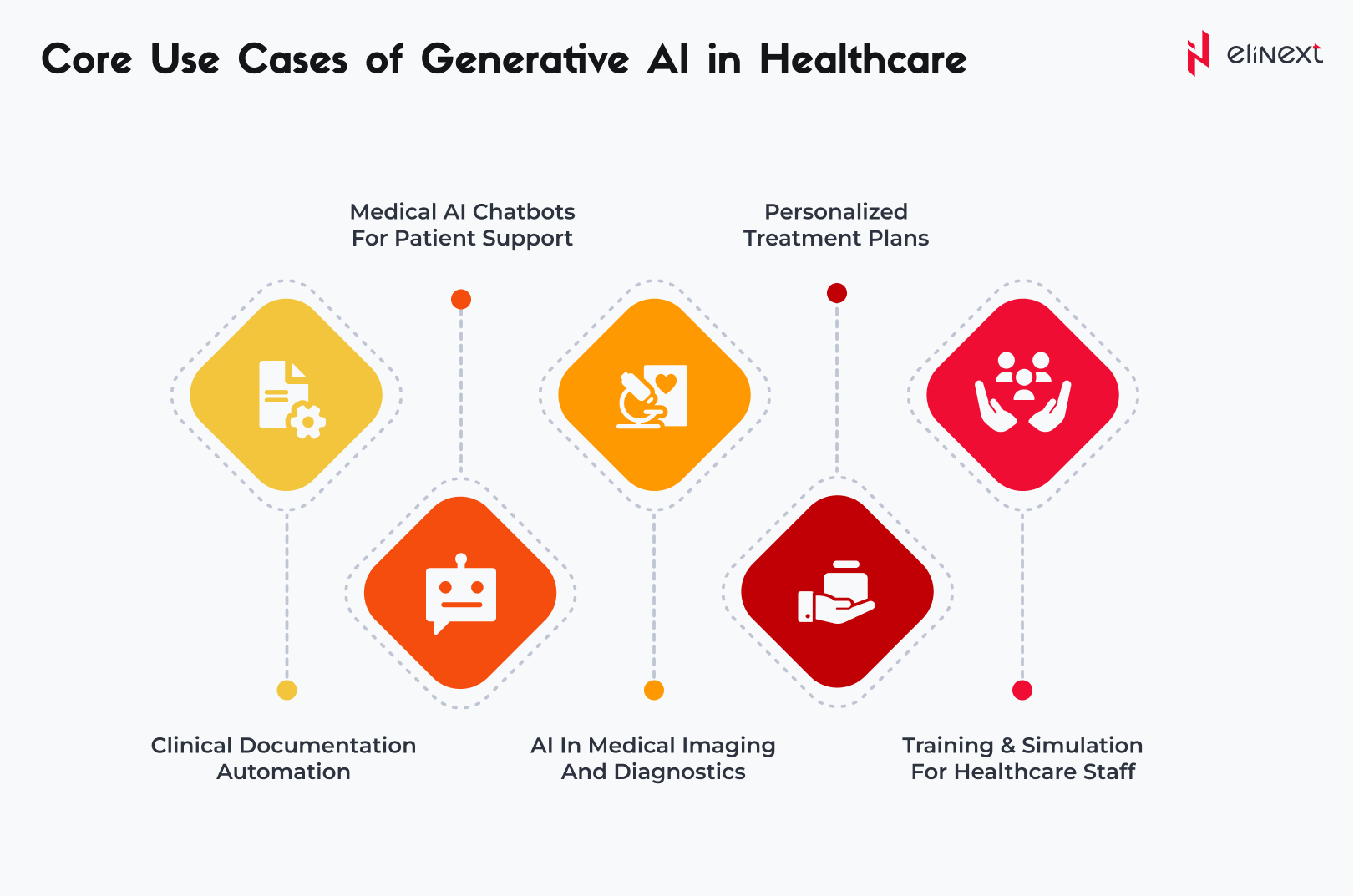
What is Generative AI in Personalized Treatment?
Generative AI, a subset of AI, is revolutionizing personalized treatment by moving beyond data analysis to detect patterns and make predictions about patient outcomes to synthetic data generation for research and personalized medicine. Also, this pioneering approach synthesizes vast datasets — including demographics, genetics, medical history and comorbidities — to predict individual responses to treatments and generate new, highly tailored therapeutic interventions, which leads to more effective and deeply personalized care.
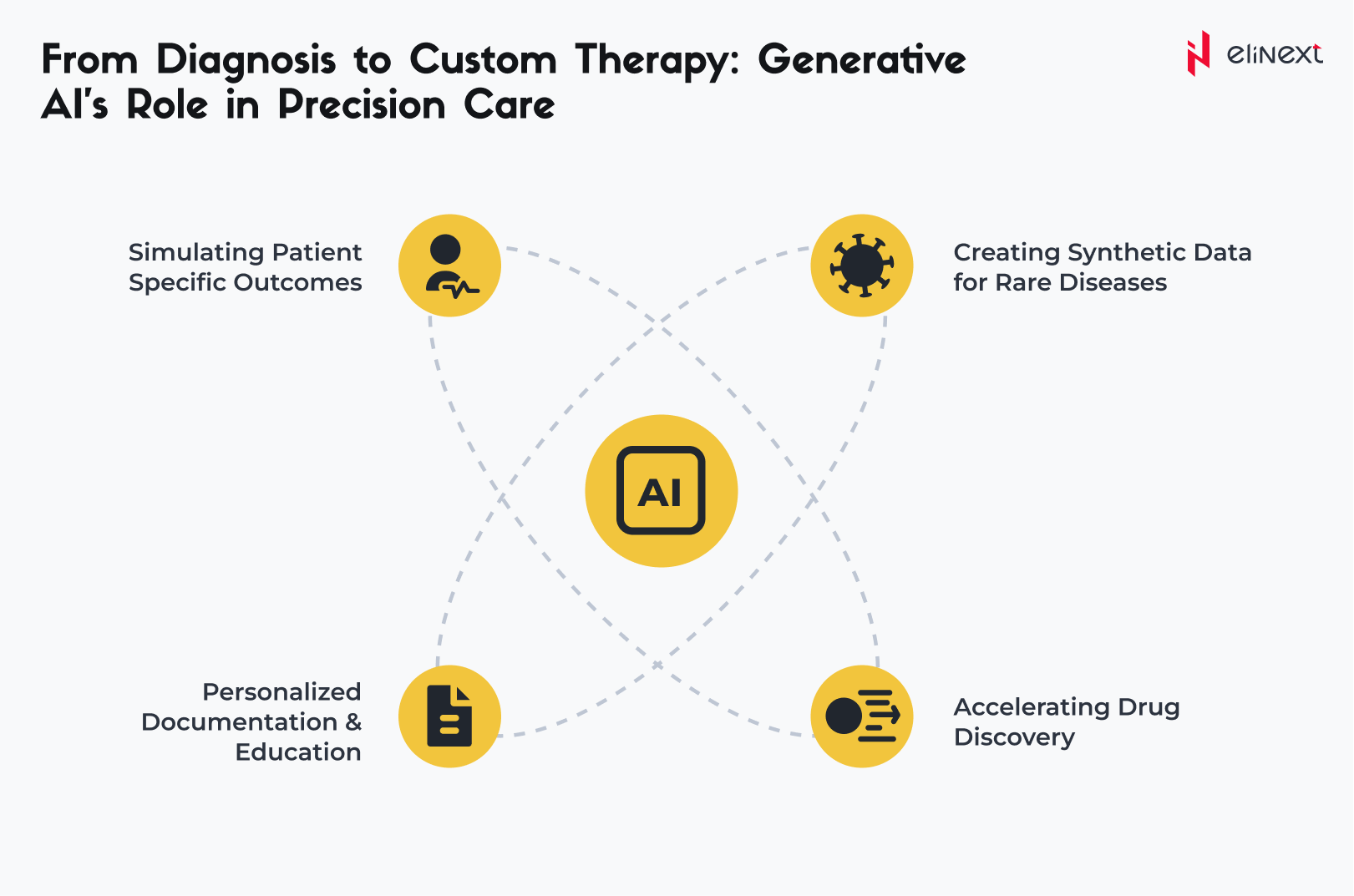
How Generative AI is Shaping Personalized Treatment Plans
Simulating Patient-Specific Outcomes
Gen AI tools can exploit such patient data as demographic, genomic information, health records, treatment histories, and lifestyle factors to predict an individual’s response to a specific therapeutic regimen.
Creating Synthetic Data for Rare Diseases
Hire our generative AI development services to create models that produce fully synthetic, partially synthetic, and hybrid data to overcome data scarcity in rare disease research (cystic fibrosis, sickle cell disease, etc.).
Personalized Documentation and Education
AI tools process a wide array of medical sources to extract insights and then simulate multiple medical conditions, enabling students to practice diagnosing and treating diseases in a risk-free environment.
Accelerating Drug Discovery
Being applied at every stage of the drug discovery (target identification, lead generation, and optimization), Gen AI tools empower pharma companies to develop new drugs faster and more cost-effectively.
Remove the guesswork from patients’ diagnosis and therapy with AI personalized treatment solutions by Elinext.
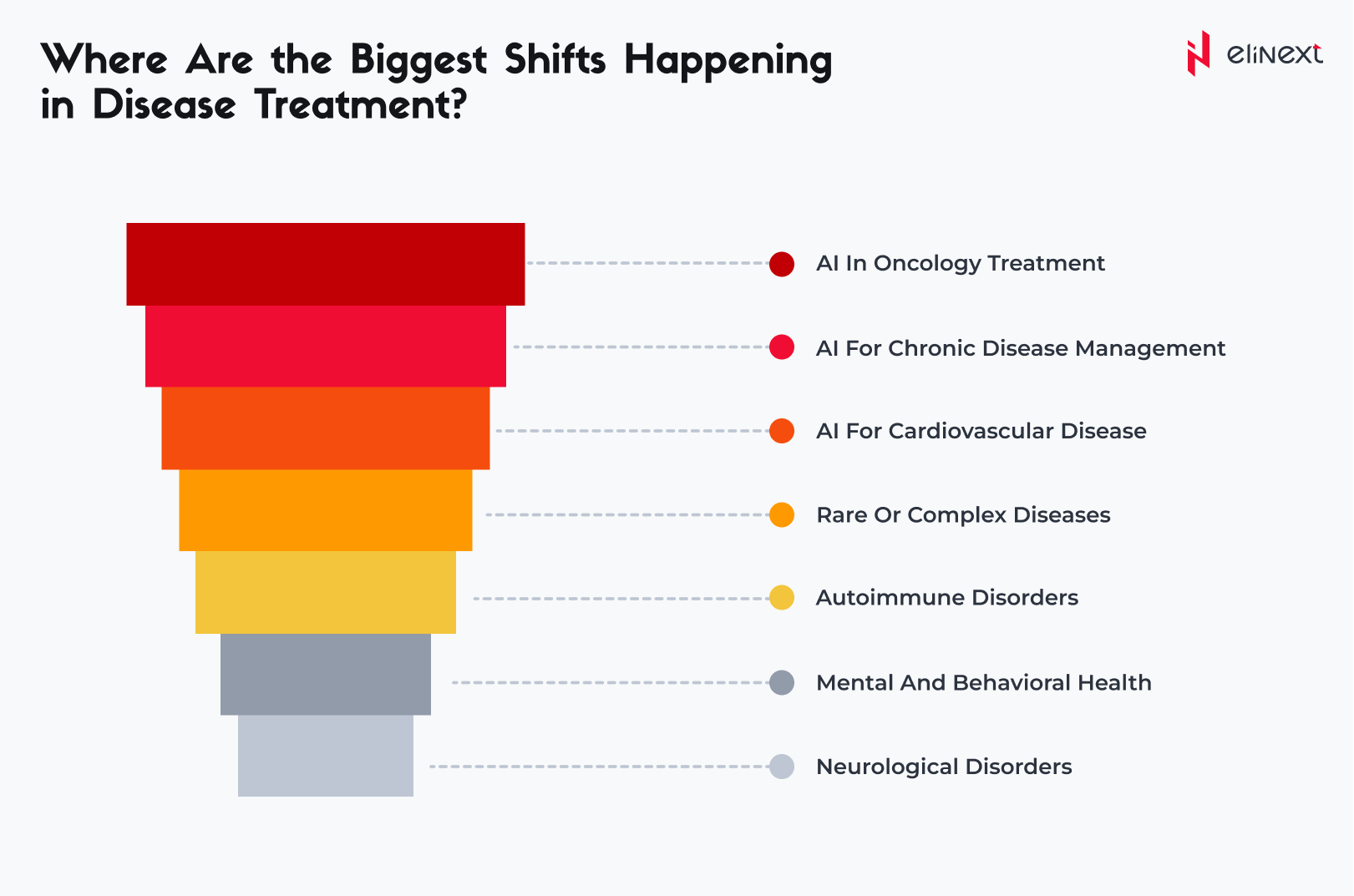
AI in Personalized Treatment: Top Use Cases
AI in Oncology Treatment
AI solutions for personalized treatment create great efficiency when it comes to cancer diagnosis and treatment. AI can detect cancer cells that are easy to miss, optimize radiation dose, predict recurrence risks, metastasis, and therapy response for tumor patients.
AI for Chronic Disease Management
By harnessing the power of AI, personalized treatment plans become a solution to effectively manage chronic conditions, helping with optimizing lifestyle behaviors (physical activity, healthy diets, etc.), pain management, psychosocial well-being and more.
AI for Cardiovascular Disease
One of the key benefits of AI in personalized treatment is its ability to improve screening and early detection of a range of CVDs, namely atrial fibrillation, pulmonary hypertension, and hypertrophic cardiomyopathy, which is crucial for mitigating disease progression and preventing associated morbidity.
AI Solutions for Rare or Complex Diseases
The impact of AI in personalized treatment is significant when it comes to diagnosing and treating individuals with less common diseases (systemic sclerosis, myositis, vasculitis, etc.), where challenges like late diagnosis/misdiagnosis and improper or no response to therapies occur.
AI Solutions for Autoimmune Disorders
Growth in the use of AI for personalized treatment is also driven by its capabilities to transform the field of autoimmune disorders (Hashimoto’s thyroiditis, lupus erythematosus, etc.) by analyzing genetic, proteomic, and clinical data to predict disease risk and progression.
AI for Mental and Behavioral Health
Having been delivering mental health app development services since 2020, Elinext is witnessing the growing role of AI in personalized treatment of mental and behavioral health issues. Innovative AI personalized treatment solutions include AI coaching systems, mental wellness platforms, virtual health assistants, etc.
AI for Neurological Disorders
By using AI for personalized treatment, healthcare providers can enhance detection and caregiving strategies for conditions such as epilepsy, Alzheimer’s, Parkinson’s, and ALS, surpassing traditional constraints of access and affordability faced by neurological patients.
“Having completed 145+ healthcare and 70+ AI software development projects, we’ve cultivated robust competency in creating highly tailored, clinical department-specific AI personalized treatment solutions. Whether that be supervised/unsupervised learning, reinforcement learning, deep learning or natural language processing, we have a wealth of hands-on experience in working with any type of AI, developing and implementing AI solutions for personalized treatment that can examine patient data to uncover hidden patterns and relationships, analyze images and spot tumors early, classify diseases, optimize drug dosages, and more.” —Maxim Dadychyn, Head of Generative AI
AI in Personalized Treatment Plans: Future Outlook
AI personalized treatment plans demonstrate huge potential to fundamentally change patient care by providing innovative ways to prevent, diagnose, treat, and manage illnesses. As the technology continues to advance, AI in personalized treatment promises a future where clinicians can anticipate health issues before acute episodes occur and intervene with pre-emptive, hyper-targeted therapies, thus elevating the quality and efficacy of treatment.
Develop high-end AI solutions for personalized treatment by partnering with an artificial intelligence development solutions company that holds a flawless 5.0-star rating on Clutch.
Conclusion
From delivering precise insights into patients health risks and treatment outcomes based on analysis of environmental, lifestyle, clinical, and deep genomics information, to generating synthetic data for rare diseases research, exploring biomarkers for drug discovery, improving education and training for medical students, and more, AI in personalized treatment have proved to be a powerful force for boosting precision, driving efficiency, and expanding the availability of personalized healthcare.
FAQ
What is AI in personalized treatment plans?
AI in personalized treatment plans leverages patient-specific data (genetic makeup and medical history) and advanced analytics to craft tailored therapeutic strategies. This enhances clinical outcomes and ensures efficient, cost-effective patient care.
How does AI improve treatment outcomes?
By using data-driven insights, AI-powered software helps design new drugs tailored to individual patients, making them more effective. Also, these precision therapies come with fewer side effects, leading to significantly enhanced treatment outcomes.
Can AI help in predictive diagnostics?
Yes, by analyzing patients’ medical history, genetics, and lifestyle, AI identifies patterns and risk factors, enabling physicians to forecast the likelihood of developing diseases and predict the progression of existing conditions.
How does AI personalize care for each patient?
AI systems can analyze each patient’s medical history and provide insights into their DNA to detect any diseases or pre-existing conditions, thus enabling clinicians to find out the most effective, individually tailored cures.
Is AI in personalized treatment safe and compliant?
When rigorously tested and grounded in strong standards and assessments, AI in personalized treatment can be accurate, safe, and compliant with regulatory standards applicable to healthcare and the pharmaceutical industry (FDA, GDPR, HIPAA, etc.)
What are examples of AI applications in personalized treatment?
AI in personalized treatment uses algorithms to analyze EHR data, assess medical imaging data, generate realistic synthetic patient data to enhance healthcare research, interpret physiological data for digital diagnosis, and more.
How does Elinext support AI in personalized treatment plans?
If you are looking to implement AI for personalized treatment, you can turn to Elinext to get expert support at each phase of the AI dev cycle (Problem Identification, Data Collection & Preparation, AI Model Design, Model Training & Testing, Deployment & Integration, and Monitoring & Maintenance).
