


About Client
Our customers are a medical device company focused on improving the comfort and efficiency of diagnostic procedures related to swallowing, communication, and ENT (ear, nose, and throat) evaluation.
The company specializes in technologies and educational resources that support procedures such as Flexible Endoscopic Evaluation of Swallowing (FEES): an important diagnostic method used by clinicians to assess swallowing disorders
In addition to producing medical equipment, our customer provides extensive clinical support, practitioner training, and technical assistance to healthcare professionals using its solutions. The company’s mission is to enable clinicians to perform diagnostic procedures efficiently while maximizing patient comfort and diagnostic accuracy.
As our client expanded its presence across hospitals and clinical centers, it became clear that practitioners lacked a single, unified software tool to support their daily work with diagnostic devices. Clinicians were forced to rely on fragmented workflows to manage patient data, process examination recordings, and prepare reports.
To address this, our client l partnered with our EHR software development company Elinext to develop a software solution designed specifically for practical, day-to-day use by medical professionals, enabling them to perform all key clinical activities within one system: from patient record creation to diagnostic reporting. They hired us for this clinical support system development.
Business Challenge
The primary goal of the project was to create a digital platform that would allow clinicians to manage the full cycle of diagnostic procedures using clients’ equipment within a single system.
Medical practitioners adopting new diagnostic technologies often face several challenges:
- Lack of a centralized tool for managing patient records, examination data, and diagnostic results
- Fragmented workflows requiring the use of multiple systems for video storage, analysis, and reporting
- Limited ability to efficiently process and review examination recordings
They needed a clinical support system development. Within that solution, healthcare professionals would get:
- End-to-end clinical workflows, from patient creation to final diagnostic report
- Efficient handling and ML-based analysis of medical video recordings
- Seamless integration with hospital systems such as EHR/EMR and PACS
- Flexible data storage options suitable for different healthcare environments
- Reliable performance in real-world clinical settings
Key business challenges in clinical support system development that the Elinext team faced included:
- Creating a platform suitable for healthcare environments with strict usability requirements
- Enabling clinicians to find procedural guidance during real-world usage quickly
- Providing technical support resources accessible across different devices
- Designing a system capable of scaling as the company expanded globally
Process
Phase 1. Discovery & Requirements Alignment
The project of clinical support system development began with a discovery phase focused on understanding the clinical workflows surrounding the client’s diagnostic devices. The Elinext team worked closely with the client to analyze examination processes, data storage requirements, and integration needs with existing medical systems.
During this phase, the team identified key functional requirements, including examination recording management, patient data handling, and report generation. Those would be needed for the medical device software development services we usually deliver.
Phase 2. Initial Build with Core Functionality
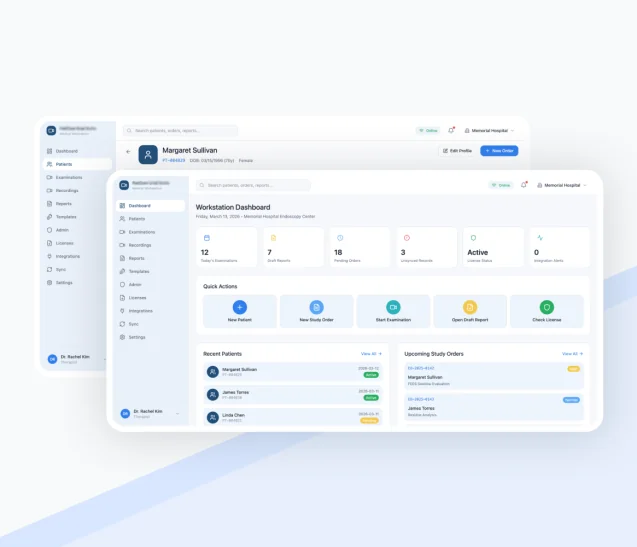
The first implementation during clinical support system development resulted in a platform designed to manage examination records, video recordings, and diagnostic reports within a single environment.
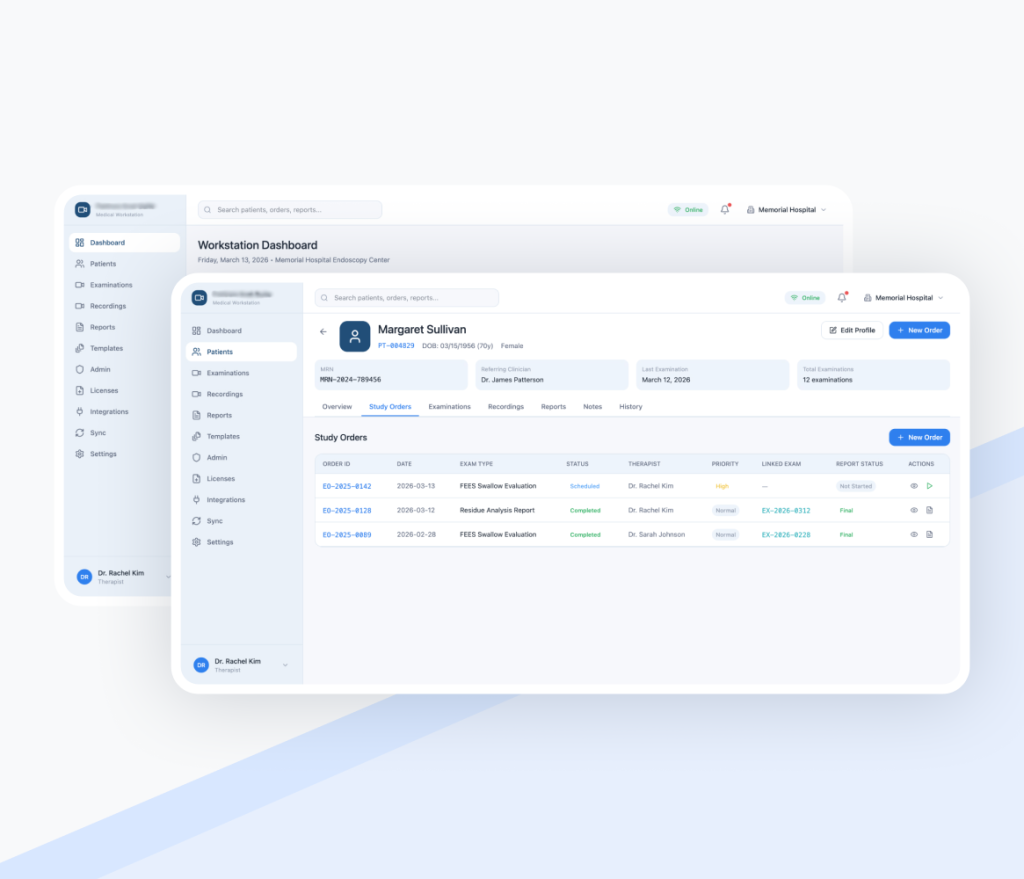
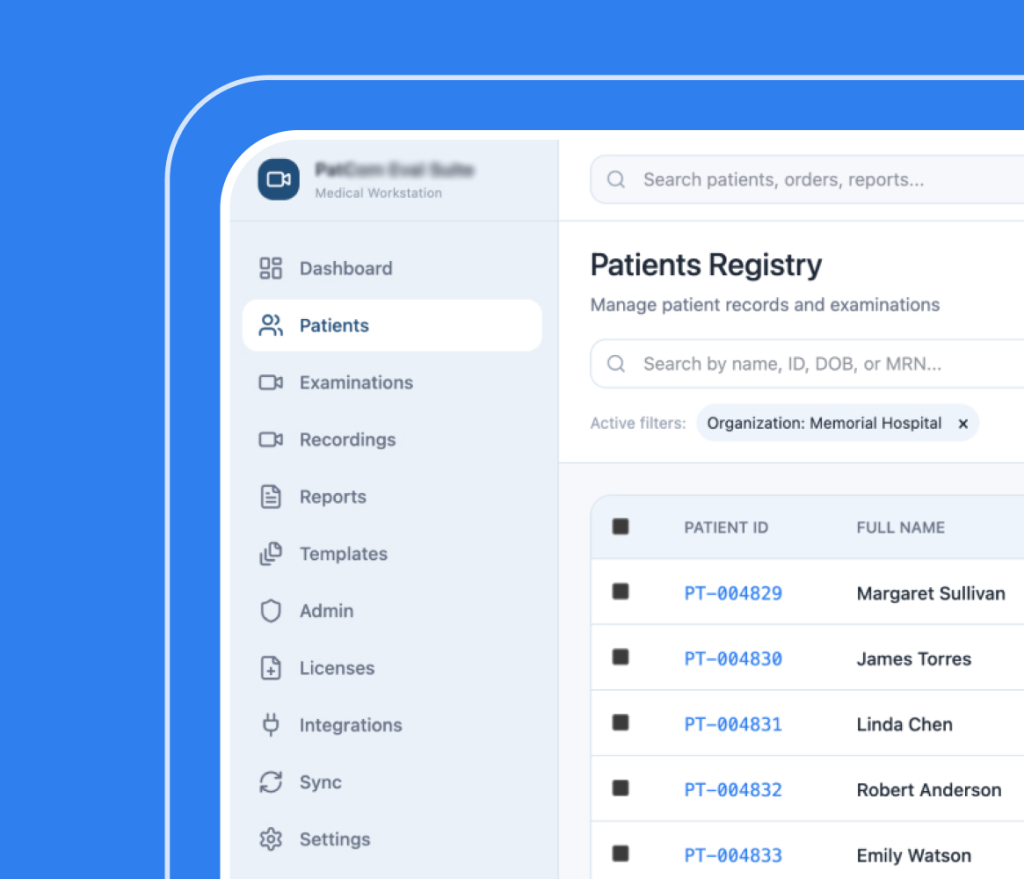
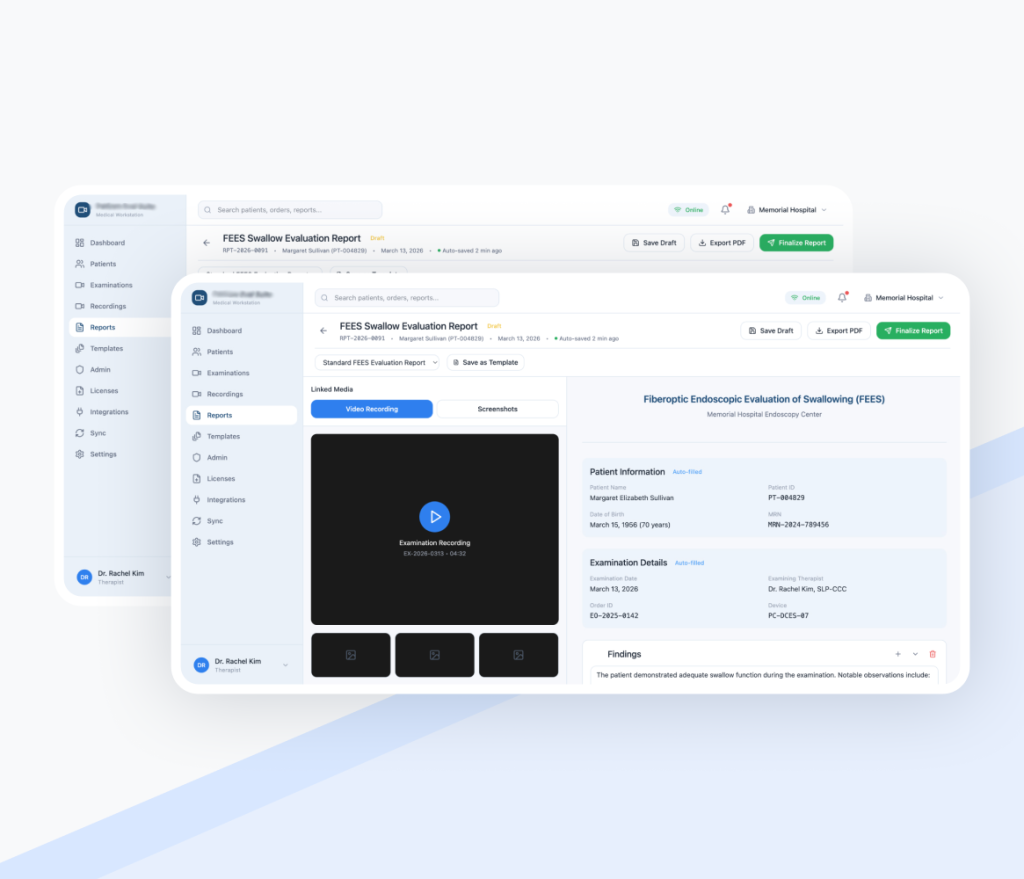
The system allowed clinicians to capture diagnostic recordings directly from the endoscopic device and organize patient examination data. Core modules included video and image management, reporting tools, patient and order management, and an administrative control panel.
Phase 3. System Expansion
During this stage of us delivering healthcare software development services, testing, and early deployment, the team identified several areas where the platform needed to evolve to better support clinical environments.
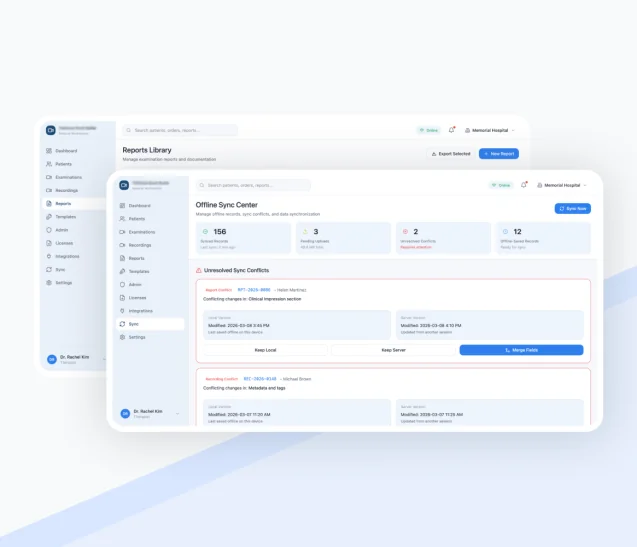
The solution was redesigned and expanded into a more advanced system, a desktop application designed for hospitals and clinics. The updated solution introduced additional capabilities, including refined license management, enhanced integrations with medical technologies and clinical protocols, and improved system scalability.
Phase 4. Integration and Infrastructure Support
A major focus of clinical support system development involved ensuring compatibility with healthcare infrastructure.
With the help of DevOps as a service and Machine Learning development services, the platform was integrated with hospital systems, including EHR/EMR solutions and PACS servers used for storing medical imaging data. The architecture also supported multiple storage options such as local drives, external storage devices, network storage, and cloud environments.
Final Product Overview
The final product of clinical support system development is a comprehensive medical examination management platform designed to support clinicians performing diagnostic procedures using our clients’ endoscopic equipment.
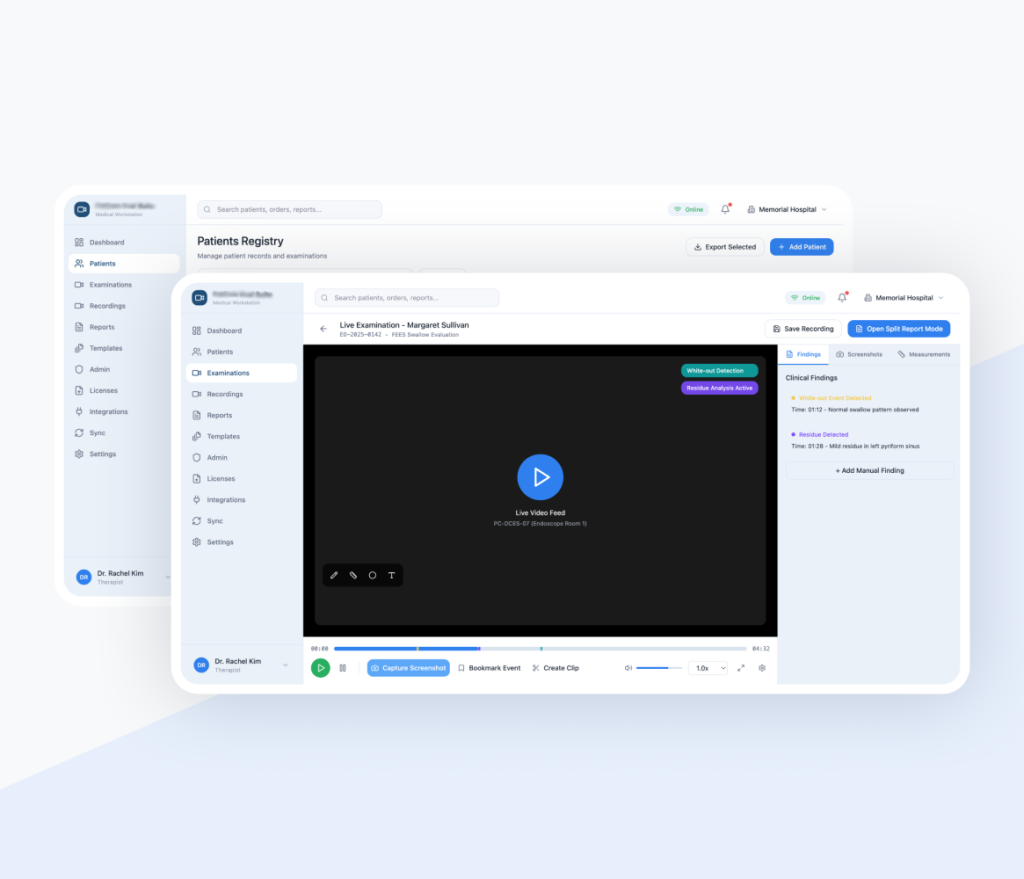
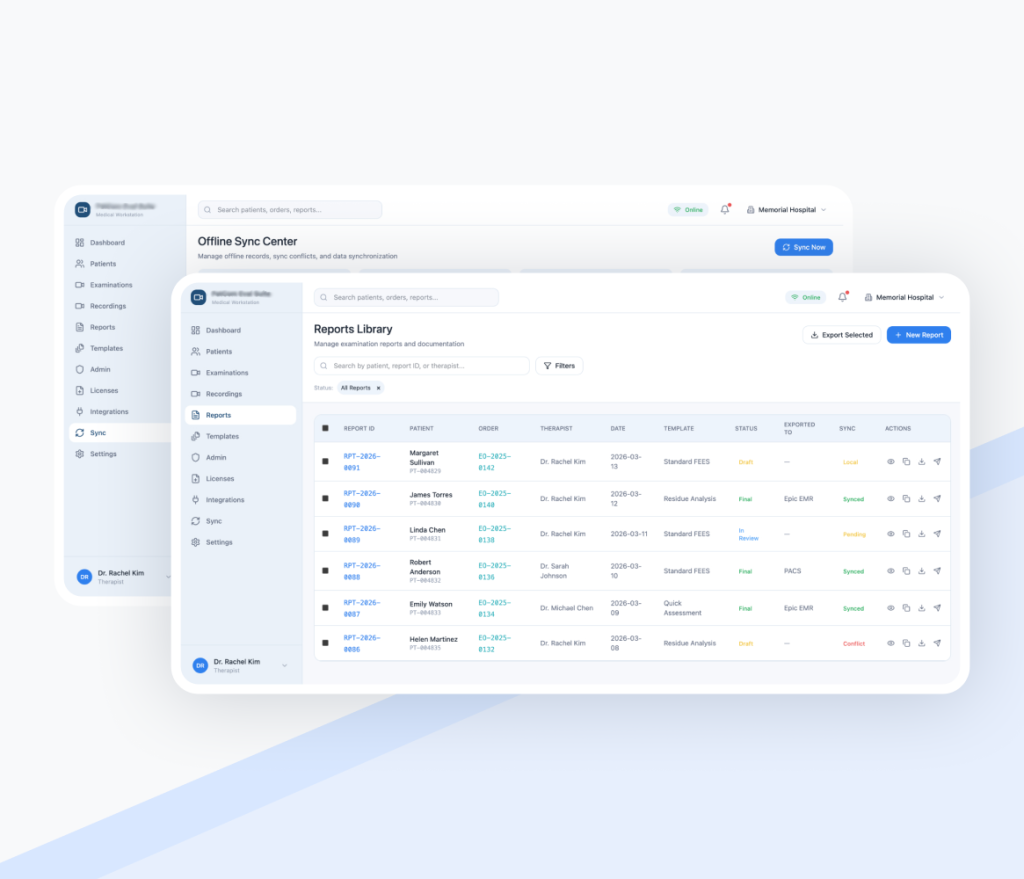
The solution enables healthcare professionals to record and manage examination videos, store patient data, and generate diagnostic reports within a single system.
With the help of clinical & workforce management solutions, clinicians can capture examination recordings directly during procedures and organize patient records alongside visual diagnostic data. Studying examination videos has become even easier thanks to ML-based mechanisms for automatic swallowing detection and residual bolus identification on the video stream. The platform also supports advanced reporting tools that help practitioners document clinical findings efficiently.
The architecture allows integration with hospital systems such as EHR/EMR platforms and PACS servers, enabling smooth exchange of patient and imaging data with existing medical infrastructure.
To accommodate the needs of different healthcare institutions, the system supports multiple storage environments, including local storage, external drives, network storage, and cloud-based storage solutions. care delivery management solutions
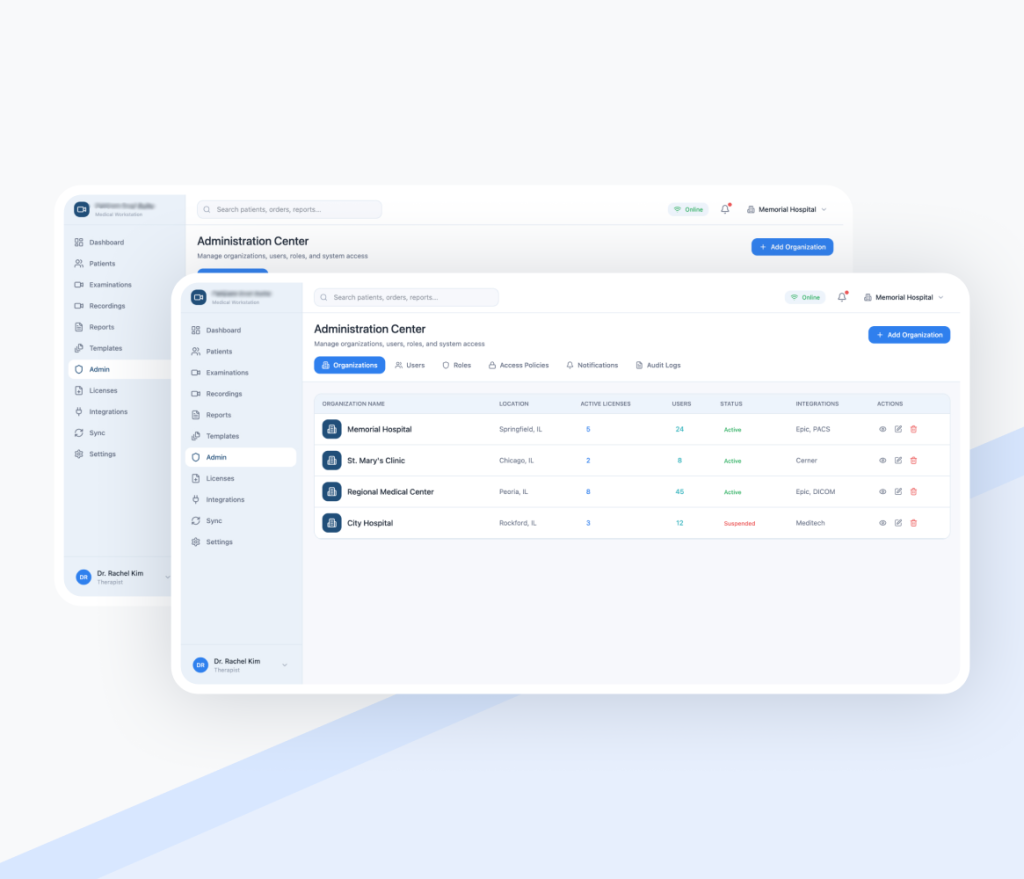
The platform also includes administrative tools and licensing management features that allow medical organizations to control system access across different clinics and healthcare environments.
Overall, after the QA and software testing services, the solution provides a reliable digital platform that complements the diagnostic equipment and improves the efficiency of clinical examination workflows.
Business Effects for Client
Business effects for the client from our medical software development services were significant. The delivered care delivery management solutions enabled our client to complement its diagnostic hardware with a scalable digital platform for managing examination data, video recordings, and clinical reports. As a result, our client strengthened the value of its medical devices while improving efficiency for healthcare providers using its technology.
Faster examination documentation: the platform centralizes video recordings, images, and patient records, reducing the time required to prepare diagnostic reports by an estimated 40–50% compared to manual workflows.
Improved clinical workflow efficiency: clinicians gained the ability to manage examinations, recordings, and reports within a single system, helping reduce administrative workload by approximately 30–40% per procedure.
Higher system reliability and scalability: the refined architecture enabled support for multiple clinics and healthcare environments simultaneously, allowing the platform to scale to dozens of clinical installations without performance degradation.
Improved data accessibility and storage flexibility: support for local, network, and cloud storage increased data accessibility and reduced data management complexity, lowering IT maintenance efforts for clinics by approximately 25–35%.